


Peugeot 308 (3rd Gen): Engineering and Technology Insights on a Compact Car
 Link copied

...
Artificial intelligence
Reading takes time?
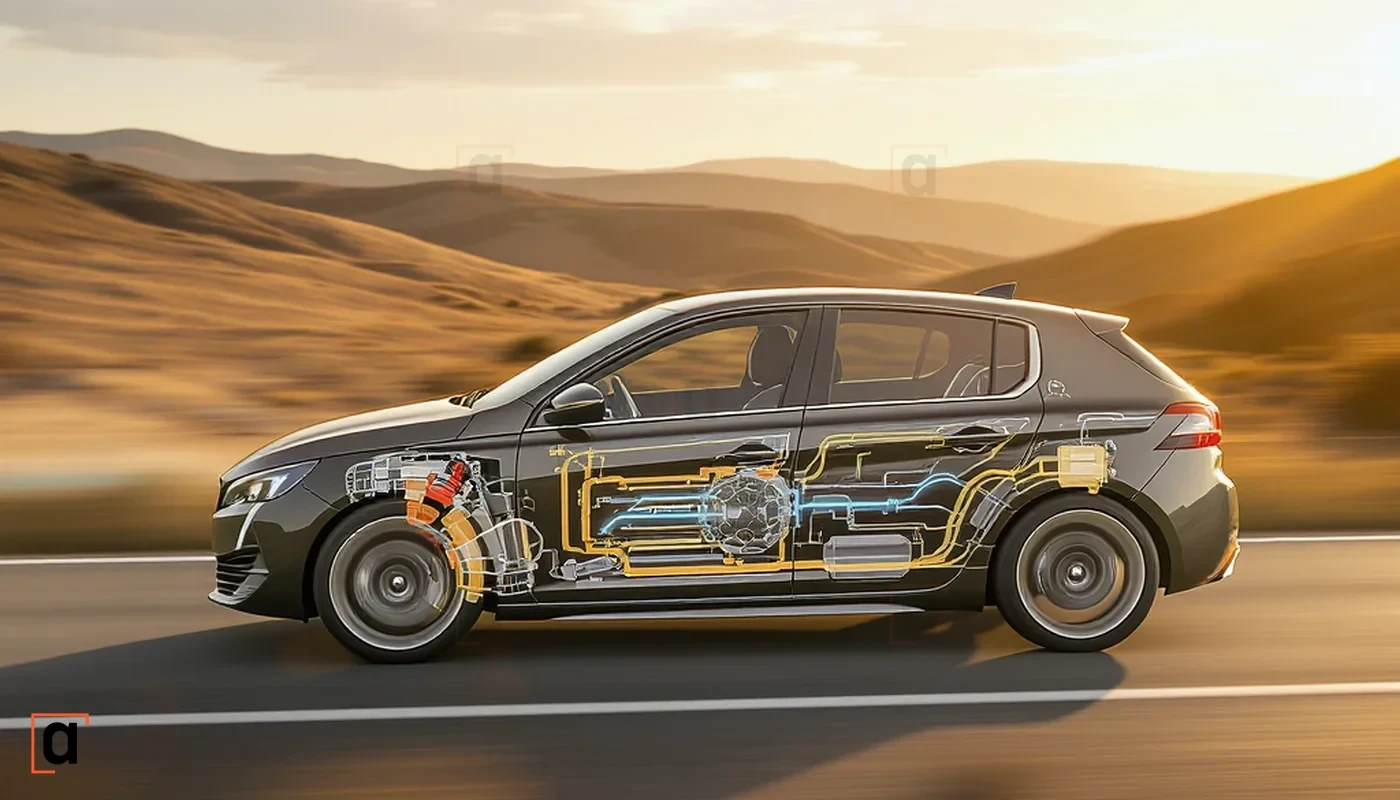
You can listen to articlesThe third generation of the Peugeot 308 is built on principles of high precision and optimization from an engineering perspective. Every component, from the platform to the engine, is carefully calibrated to enhance the vehicle’s overall performance.
The new Peugeot 308 is based on the modular EMP2 platform. Thanks to the use of lightweight materials and a robust structure, this platform reduces the car’s weight while improving road handling and fuel efficiency. The front-wheel-drive system efficiently transfers engine power to the front wheels, minimizing mechanical losses.
The car is equipped with a 1.2-liter turbocharged PureTech petrol engine. The turbocharger allows more air into the combustion chamber, intensifying the combustion process. As a result, this 3-cylinder engine delivers both high power and torque while employing modern light-load and shutdown technologies to reduce fuel consumption.
The suspension system of the Peugeot 308 features MacPherson struts at the front and a multi-link setup at the rear. This configuration provides both comfort and excellent road grip. The main role of the suspension is to effectively absorb vibrations and shocks from the road, enhancing vehicle stability. The electric power-assisted steering makes maneuvering in urban environments easier and more comfortable for the driver.
However, the 1.2-liter engine may feel underpowered in certain situations, especially in mountainous areas and during rapid overtaking. The front-wheel-drive layout can also impose some limitations on traction in rainy or downhill conditions. In Azerbaijan, where road conditions can be variable and sometimes unstable, the suspension system may face additional strain.
The Peugeot 308’s safety and electronic systems meet modern standards. The car is equipped with ABS, ESP (electronic stability program), tire pressure monitoring, and advanced driver assistance systems. These technologies enhance dynamic stability and safety. Multimedia and information displays provide the driver with real-time engine and safety data.
One notable engineering feature is the turbocharger’s thermal management system. It maintains the engine’s optimal operating temperature, reducing fuel consumption and harmful emissions. The lightweight aluminum and polymer composites used in the platform help lower the overall vehicle weight, further improving fuel efficiency.
The third-generation Peugeot 308 is primarily designed for daily use in urban and suburban settings. Its lightweight engine and electric power steering facilitate easy maneuvering in city traffic. However, power limitations should be considered on mountainous and steep roads. Drivers who require long-distance travel and higher speeds might prefer more powerful engine options.
Considering Azerbaijan’s hot summers and mountainous terrain, the 308’s turbocharged engine may show some sensitivity to varying fuel qualities. Nevertheless, its suspension and steering systems are well-suited for city traffic and mixed road conditions. The sometimes unstable road surfaces can place extra load on suspension components, making regular maintenance and attention to fuel quality especially important.
In conclusion, the third-generation Peugeot 308 is a lightweight, fuel-efficient compact car equipped with modern technologies. Its turbocharged engine and EMP2 platform simplify handling and reduce fuel consumption. In Azerbaijan, this model is best suited for effective use in urban and surrounding areas, although some limitations should be kept in mind under harsh road conditions.